

Best Dogs Pet Toys: A Complete Play Style Guide
Dogs pet toys are essential tools that provide physical exercise, mental enrichment, and emotional comfort to your dog. The American Kennel Club classifies dog toys into five functional categories: training, treat-dispensing, interactive, comfort, and self-amusement toys. Each category targets a different aspect of canine health and behavior. Choosing the right toy for your dog’s play style prevents frustration and keeps your dog genuinely engaged. This guide covers every major toy type, how to match toys to your dog’s needs, and how to keep those toys safe and lasting longer.
What are the main types of dogs pet toys?
The five expert categories cover every play need a dog has, from burning energy to calming anxiety. Understanding each type helps you build a well-rounded toy collection instead of buying at random.
- Training toys promote obedience and skill-building. These include tug ropes, target sticks, and reward-based fetch items. They work best during structured sessions where you reinforce commands.
- Treat-dispensing toys offer mental stimulation through reward-based play. Dogs must problem-solve to access hidden treats, which reduces boredom and destructive behaviors. These are especially valuable for dogs in small apartments or with high cognitive energy.
- Interactive toys enhance owner-pet bonding through shared play. Fetch balls, tug ropes, and chase toys fall into this category. They require your participation, which strengthens your relationship with your dog.
- Comfort toys provide emotional support and relaxation. Soft plush animals and calming toys with soothing sounds help dogs manage separation anxiety and stress. Shopruff’s soft plush pet bed pairs naturally with comfort toys to create a full relaxation zone.
- Self-amusement toys keep dogs entertained independently. Rolling balls, squeaky toys, and spinning feeders let dogs play solo. A rolling dog ball is a strong example of a self-amusement toy that supports both mental and physical engagement.
Each category fills a specific gap. A dog that only gets fetch toys misses out on mental stimulation. A dog that only gets puzzle toys may lack physical outlets. Mixing categories gives your dog a complete, balanced play life.
How to choose the right play toy for your dog’s size and breed
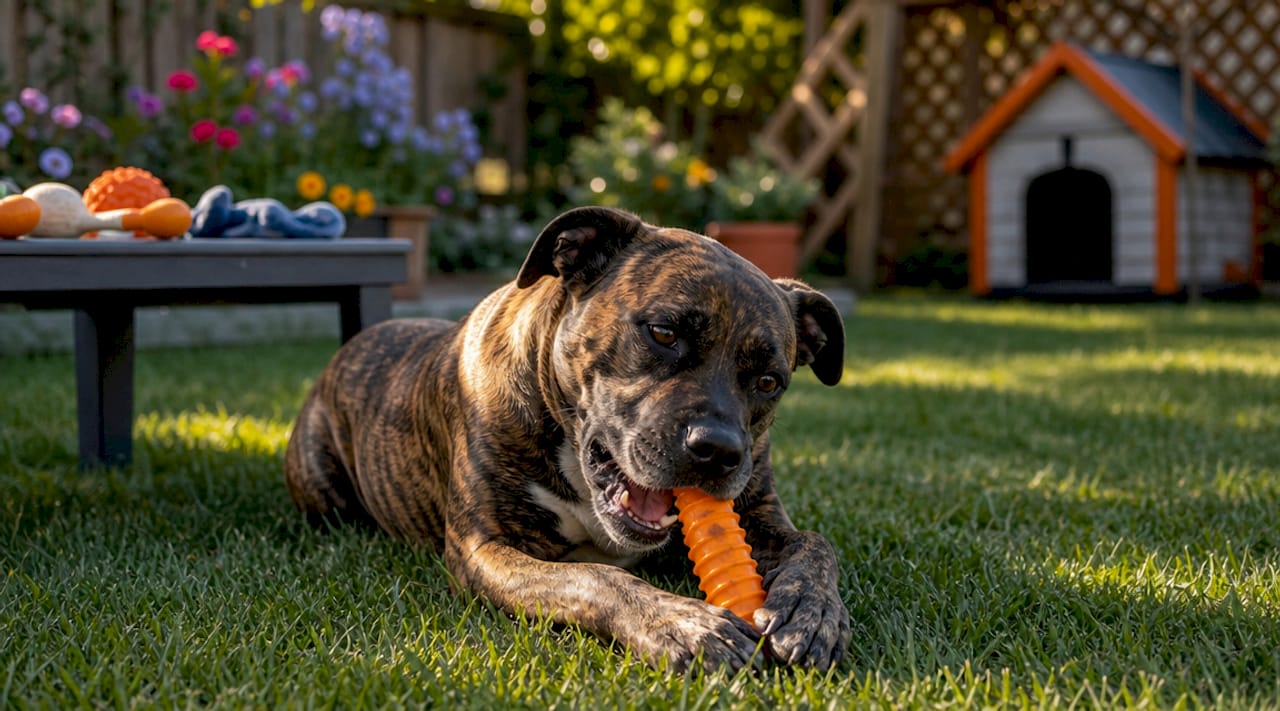
Matching toys to a dog’s play style is the single most important factor in keeping your dog engaged and safe. A toy that fits one dog perfectly can frustrate or even injure another.
Start by identifying your dog’s dominant play style:
- Chewers need durable toys made from tough rubber or nylon. Soft plush toys will be destroyed in minutes and can become choking hazards.
- Fetchers love balls, flying discs, and anything they can chase and retrieve. Retrievers enjoy fetch toys by instinct, while terriers often prefer chewing or shredding.
- Cuddlers gravitate toward soft plush toys and comfort items. These dogs use toys for emotional reassurance, not just play.
- Puzzle lovers thrive with treat dispensers and snuffle mats. These dogs need mental challenges as much as physical ones.
Toy size matters as much as toy type. A toy that fits in a small dog’s mouth is a choking hazard for a large breed. The American Kennel Club recommends matching toy size to your dog’s mouth to prevent accidental swallowing. Always check that toys are free of small detachable parts and made from non-toxic materials.
Pro Tip: Buy one toy from each category and watch which one your dog returns to most often. That behavior tells you your dog’s dominant play style, and you can build from there.
8 top types of play dog toys to keep your dog entertained
1. Durable chew toys
Chew toys satisfy natural chewing urges while protecting your furniture and household items. Harder rubber varieties work best for power chewers, while softer options suit puppies with developing teeth. Chew toys also support dental health by scraping plaque from teeth during use. Shopruff’s Croc Dental Chew combines chewing satisfaction with oral hygiene in one product.
2. Treat-stuffed puzzle toys
Puzzle toys and treat dispensers mentally tire dogs as effectively as physical exercise. Dogs must work to release the reward, which burns cognitive energy and keeps them focused. This makes puzzle toys ideal for rainy days or when outdoor exercise is limited. Fill a rubber puzzle toy with peanut butter or kibble and watch your dog stay occupied for 20 minutes or more.
3. Fetch balls and flying discs
Fetch toys are the gold standard for high-energy dogs that need to run. A standard tennis ball works, but purpose-built fetch balls are more durable and easier to clean. Flying discs add an aerial challenge that keeps athletic dogs fully engaged. Shopruff’s interactive toy balls are built for exactly this kind of active, bonding play.
4. Squeaky plush toys
Squeaky plush toys appeal to a dog’s prey drive. The sound triggers the same instinct that makes dogs chase small animals. These toys work best for gentle chewers and cuddlers. For aggressive chewers, squeaky plush toys rarely last more than one session, so reserve them for dogs that play gently.
5. Rope and tug toys
Tug toys build strength and give dogs an outlet for competitive energy. They also double as training tools when you use them to practice “drop it” and “leave it” commands. Rope toys are generally safe, but inspect them regularly for fraying. Loose rope fibers can be swallowed and cause intestinal blockages.
6. Snuffle mats and nose work toys
Snuffle mats hide food in fabric folds, forcing dogs to use their nose to find it. Scent work is deeply tiring for dogs because it activates a large portion of their brain. A 15-minute snuffle mat session can calm a hyperactive dog more effectively than a 30-minute walk. These toys are especially useful for senior dogs that cannot handle intense physical exercise.
7. Water toys
Water toys are designed for dogs that love to swim or play in sprinklers. Floating fetch toys and water-safe chew items let aquatic breeds like Labrador Retrievers and Portuguese Water Dogs play in their natural element. Standard toys absorb water and grow mold quickly, so purpose-built water toys are worth the investment.
8. Rotating your toy collection
Rotating toys weekly maintains your dog’s interest without requiring constant new purchases. Limit the number of toys available at one time, then swap them out on a schedule. A toy that has been “away” for a week feels new again to your dog. This simple habit extends the life of your collection and keeps your dog consistently excited.
Pro Tip: Store half your dog’s toys in a closed bin. Swap the available set every Sunday. Your dog will treat the returning toys like they just arrived from the store.
How to care for and maintain your dog’s toys
Toy maintenance protects your dog and saves you money. A worn toy can become a serious hazard quickly.
- Inspect toys weekly. Look for cracks in rubber, loose squeakers, fraying rope, and torn fabric. Remove any toy that shows significant wear immediately.
- Clean toys regularly. Rubber and plastic toys can go in the dishwasher on the top rack. Fabric and plush toys can usually be machine washed on a gentle cycle. Rope toys can be soaked in hot water and air dried.
- Replace toys on schedule. Toy safety requires matching toy size to your dog’s mouth and replacing items before they break into swallowable pieces. A toy that has lasted six months of heavy chewing is likely overdue for replacement.
- Store toys properly. Keep toys in a clean, dry bin. Moisture promotes mold, especially in rope and fabric toys.
Pro Tip: Take a photo of each toy when you buy it. Compare the photo to the toy’s current condition every month. The visual difference makes it much easier to decide when to replace it.
Key takeaways
The most effective approach to dogs pet toys is matching each toy to your dog’s play style, size, and cognitive needs while rotating the collection weekly to sustain interest.
| Point | Details |
|---|---|
| Match toy to play style | Identify whether your dog is a chewer, fetcher, cuddler, or puzzle lover before buying. |
| Use all five toy categories | Rotate training, treat-dispensing, interactive, comfort, and self-amusement toys for full coverage. |
| Prioritize size and safety | Match toy size to your dog’s mouth and choose non-toxic, part-free designs to prevent injury. |
| Rotate weekly | Swap available toys every week to keep your dog engaged without buying new toys constantly. |
| Inspect and replace regularly | Check toys weekly for wear and replace them before they break into hazardous pieces. |
What I’ve learned from watching dogs play every day
I used to think buying more toys solved the problem of a bored dog. It does not. The dogs I have seen thrive are the ones whose owners picked fewer toys and picked them deliberately. A retriever with one great fetch ball and one puzzle feeder is happier than a dog buried in a pile of random plush animals.
The insight that changed how I think about this is mental enrichment. Most dog owners focus entirely on physical exercise, but mental stimulation is equally important for a dog’s overall health. A dog that gets a 20-minute puzzle session in the morning is noticeably calmer for the rest of the day. That is not anecdotal. It reflects how much cognitive energy dogs burn when they problem-solve.
The other thing I would push back on is the idea that expensive toys are automatically better. The toy your dog returns to obsessively is the right toy, regardless of price. Pay attention to that behavior. It tells you more than any product review.
My honest recommendation is to start with one toy from each of the five categories, watch your dog for two weeks, and then double down on the categories that get the most use. Safety and variety matter more than quantity.
— Caleb
Shopruff has the toys and comfort products your dog needs
Your dog deserves toys that are built to last and products that genuinely support their well-being. Shopruff combines durability with thoughtful design across its full range of pet products.
Shopruff’s interactive toy balls are built for active play and owner-pet bonding, making fetch sessions more fun and more durable. After playtime, give your dog a place to truly rest with Shopruff’s plush pet bed, designed with ultra-soft materials and calming features that ease anxiety. First-time customers get 10% OFF with code WELCOME10, and orders over $99 ship FREE! Shopruff’s 24/7 customer support team is always ready to help you find the right product for your dog.
FAQ
What are the five main types of dog toys?
The five expert categories are training, treat-dispensing, interactive, comfort, and self-amusement toys. Each category addresses a different aspect of canine health and behavior.
How do I know which toy is right for my dog?
Identify your dog’s dominant play style first: chewer, fetcher, cuddler, or puzzle lover. Then match toy size and toughness to your dog’s breed and chewing strength to prevent injury.
How often should I replace my dog’s toys?
Inspect toys weekly and replace any toy that shows significant wear, cracks, or loose parts. A toy that has endured months of heavy chewing is likely ready for replacement before it breaks into swallowable pieces.
Do mental enrichment toys really make a difference?
Treat-dispensing puzzle toys mentally tire dogs as effectively as physical exercise, which reduces boredom and destructive behavior. They are especially valuable for high-energy dogs in smaller living spaces.
What is toy rotation and why does it help?
Toy rotation means limiting the toys available at one time and swapping them weekly. This keeps toys feeling new and maintains your dog’s interest without requiring constant new purchases.